
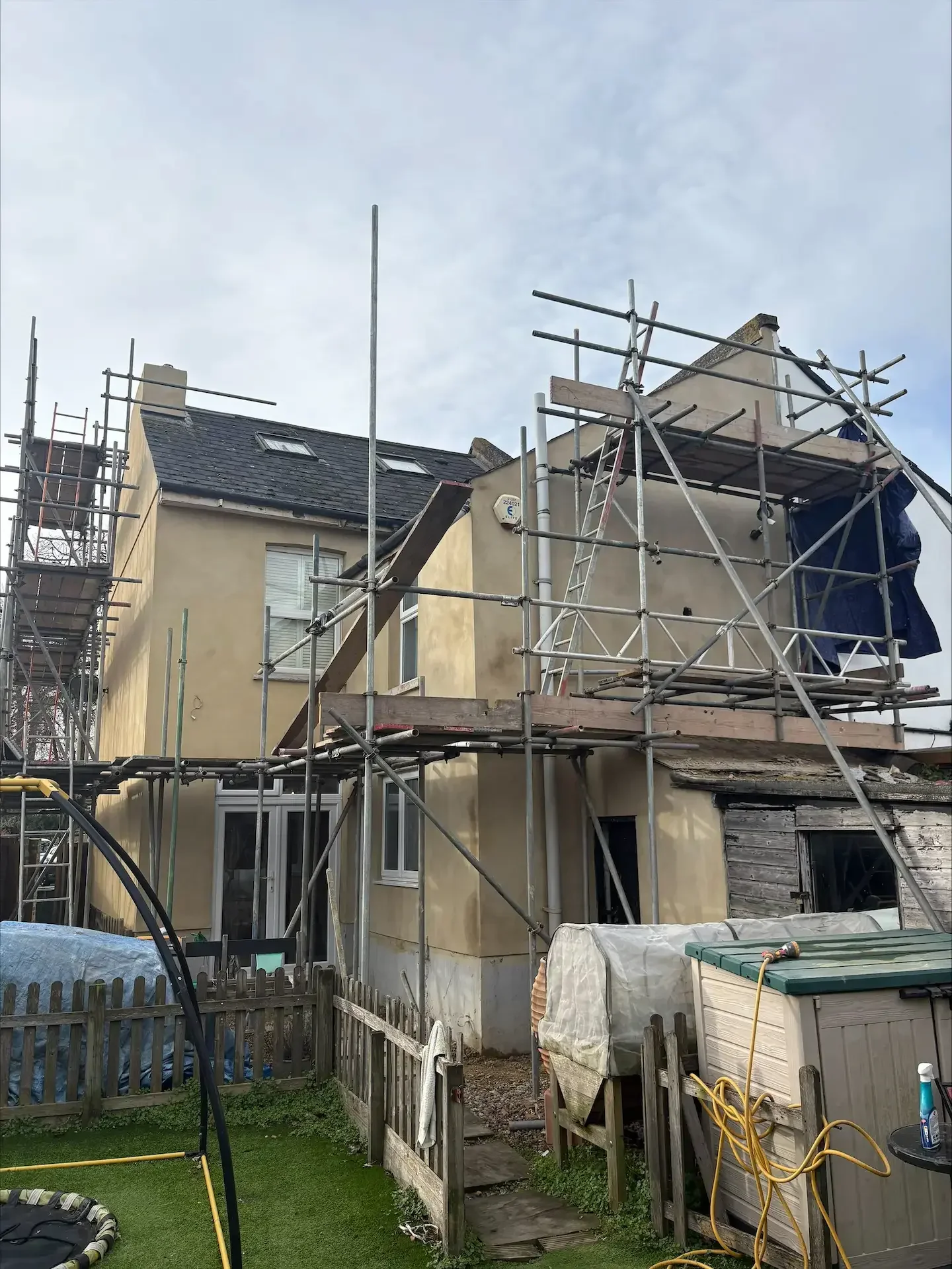
Traditional Sand & Cement Rendering
Tough, Proven and Competitively Priced
Sand and cement render is one of the most tried-and-tested methods of protecting and finishing exterior walls. Strong, hard-wearing and suitable for almost any property, it remains a popular choice for solid wall homes, older properties and cost-conscious refurbishment projects.
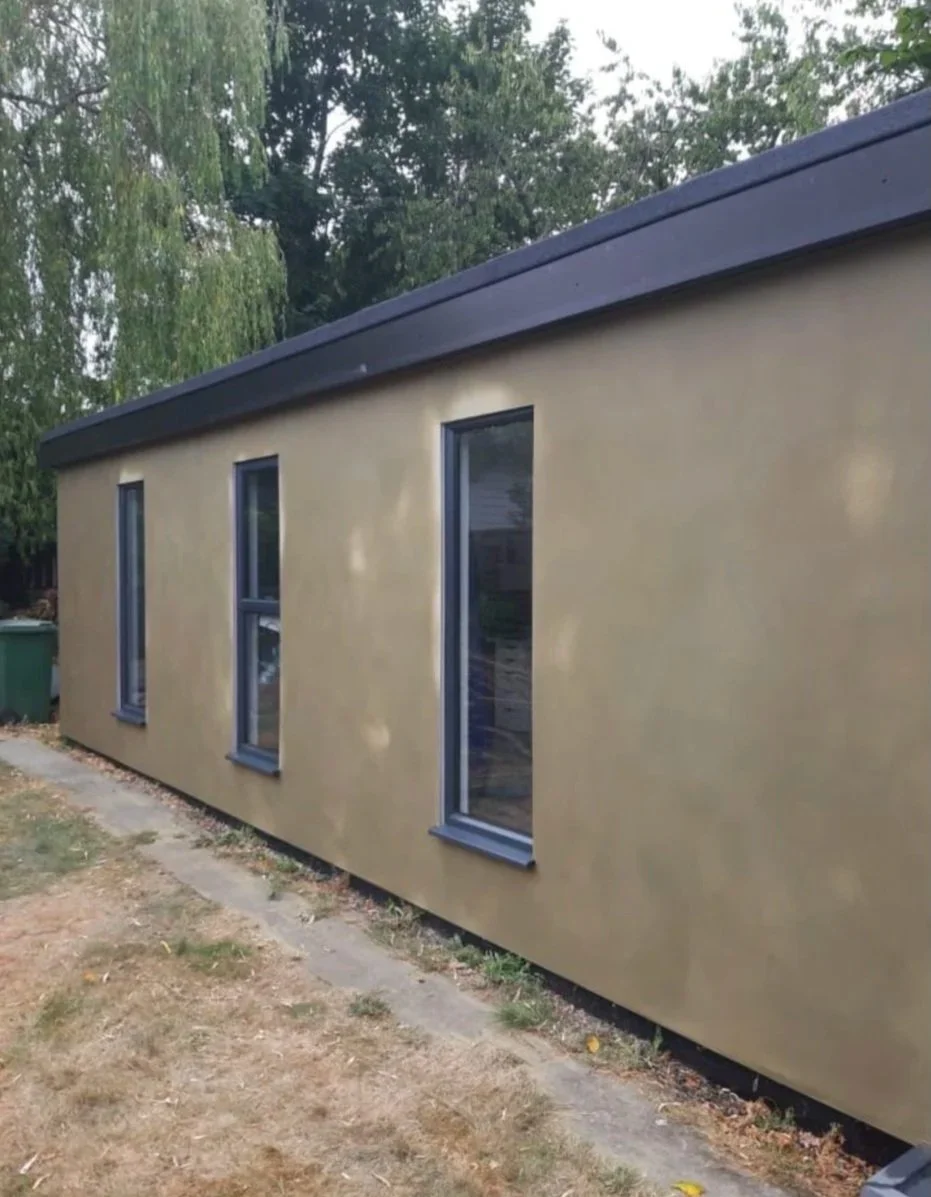
Traditional sand and cement rendering involves applying one or more coats of a carefully mixed sand and cement mortar to the exterior wall surface. Once set and finished — smooth, textured, or prepared for painting – it provides a robust, weatherproof coat that protects the masonry beneath from rain, wind and frost.
Unlike modern silicone systems, sand and cement render is a denser, harder finish. This makes it highly impact-resistant and ideal for properties that experience knocks and abrasion at ground level, or where a heavier, more traditional appearance is desired.
It is also the most cost-effective rendering option and a practical choice for homeowners who intend to paint the exterior, want a matching finish on an older property, or are working to a budget without compromising on protection and durability.
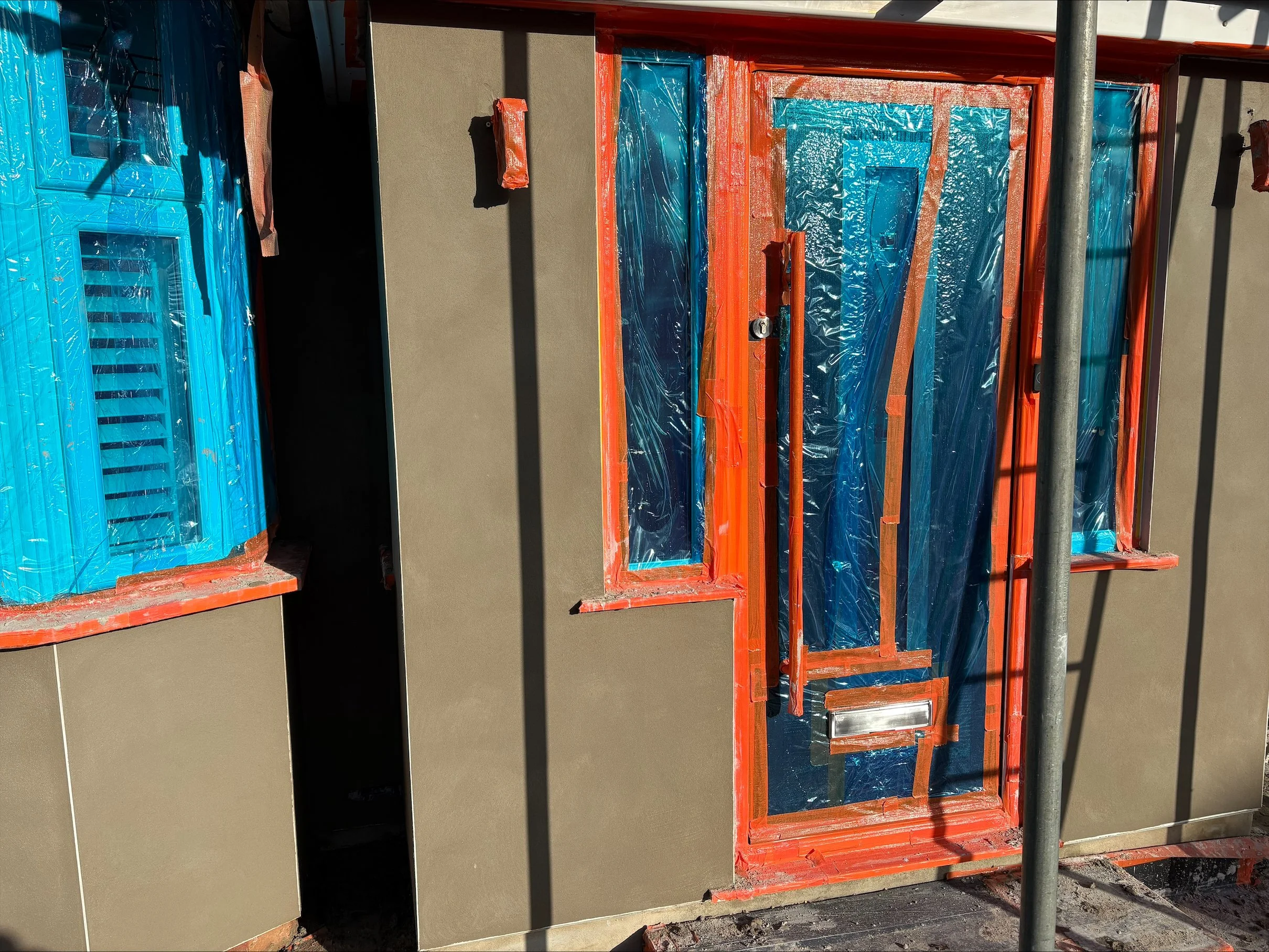
Benefits of sand & cement render
Highly durable and impact-resistant
Cost-effective compared to silicone and EWI systems
Suits older, solid-wall and uneven properties
Can be finished smooth, textured or ready for painting
Excellent protection against driving rain and frost
Works well with lime-based mixes on historic properties
Long track record – used successfully for over a century
Our Sand & Cement Rendering Process
Preparation
We remove any loose, crumbling or contaminated render and repair cracks in the masonry. The wall is cleaned and a bonding agent applied where needed.
Scratch Coat
A first coat of sand and cement is applied and scored (scratched) across the surface while still wet. This creates a mechanical key for the next coat to bond to.
Top Coat Application
A second coat is applied to the required depth and worked to an even surface. We use carefully gauged mixes to minimise shrinkage cracking.
Finishing
The surface is floated, textured or prepared for masonry paint as required. Reveals, beads and sills are detailed for a clean, professional result.
Final Clean Down
Edges are sealed, masking removed and the property left clean and tidy.
Things to know about Cement Render
Sand and cement render is a rigid material and can develop hairline cracks over time as buildings naturally move with seasonal temperature changes. This is normal and does not necessarily indicate structural failure, but cracks should be monitored and repointed periodically.
For properties where cracking is a concern, or where a longer maintenance-free life is the priority, our Basecoat & Silicone system offers a more flexible, longer-lasting alternative.
Sand & Cement Rendering in Kent & South East London
We carry out traditional rendering across Kent including Maidstone, Medway, Tonbridge, Sevenoaks, Canterbury and Ashford, as well as South East London including Bromley, Bexley, Sidcup and Dartford.
Frequently Asked Questions
-
Traditional sand and cement render typically lasts between 10 and 20 years depending on the quality of application, the exposure of the property, and how well it's maintained. Properties in exposed locations — particularly those facing prevailing wind and rain — tend to see cracking and erosion more quickly than sheltered ones. The finish can be extended by painting regularly and addressing cracks early. For a lower-maintenance alternative with a longer lifespan, our silicone render systems are worth considering.
-
Generally, yes — sand and cement render is a more cost-effective option upfront. However, it requires painting to achieve a coloured finish, and that painting will need to be repeated every few years to maintain appearance and water resistance. Silicone render costs more initially but is maintenance-free in terms of repainting. Over a 15–20 year period, the total cost of ownership can be comparable. We're happy to discuss both options honestly during your free quote visit.
-
Sand and cement render works well on solid brick, block, and stone substrates. It's particularly well-suited to older properties with robust walls where the slight rigidity of a cement-based finish isn't a concern. It's less ideal for lightweight or thin-joint blockwork, or on properties with known structural movement — in those cases, a more flexible silicone system is usually the better recommendation.
-
Yes — unless you're happy with the natural grey-buff colour of the finished render, sand and cement render will need to be painted to achieve a coloured or white finish. The paint also adds an additional layer of weather protection. We recommend using a masonry paint specifically designed for rendered surfaces, and re-coating every 5–8 years to maintain performance.
-
In some cases, yes. If the pebbledash is well-bonded and structurally sound, it may be possible to apply a scratch coat and top coat of sand and cement over it with appropriate preparation. If the pebbledash is hollow, loose, or failing in any way, it needs to be removed first. We'll assess the existing surface as part of the free quote visit and advise accordingly.

Thinking about traditional render for your property?
If you're not sure whether sand and cement or a modern silicone system is right for your property, our team is happy to advise. Contact us for a free, no-obligation site visit and quote.